
You know your data protection programme has gaps. Your team knows it too. But without a structured assessment, you’re guessing at priorities — and guessing means the wrong things get fixed first while the real risks go unaddressed.
A maturity assessment gives you the evidence. It tells you exactly where your programme stands, where the critical gaps are, and what to do about them — in priority order, aligned to your business risk appetite, not a generic checklist.
The result: a clear, funded roadmap that leadership can understand and support.
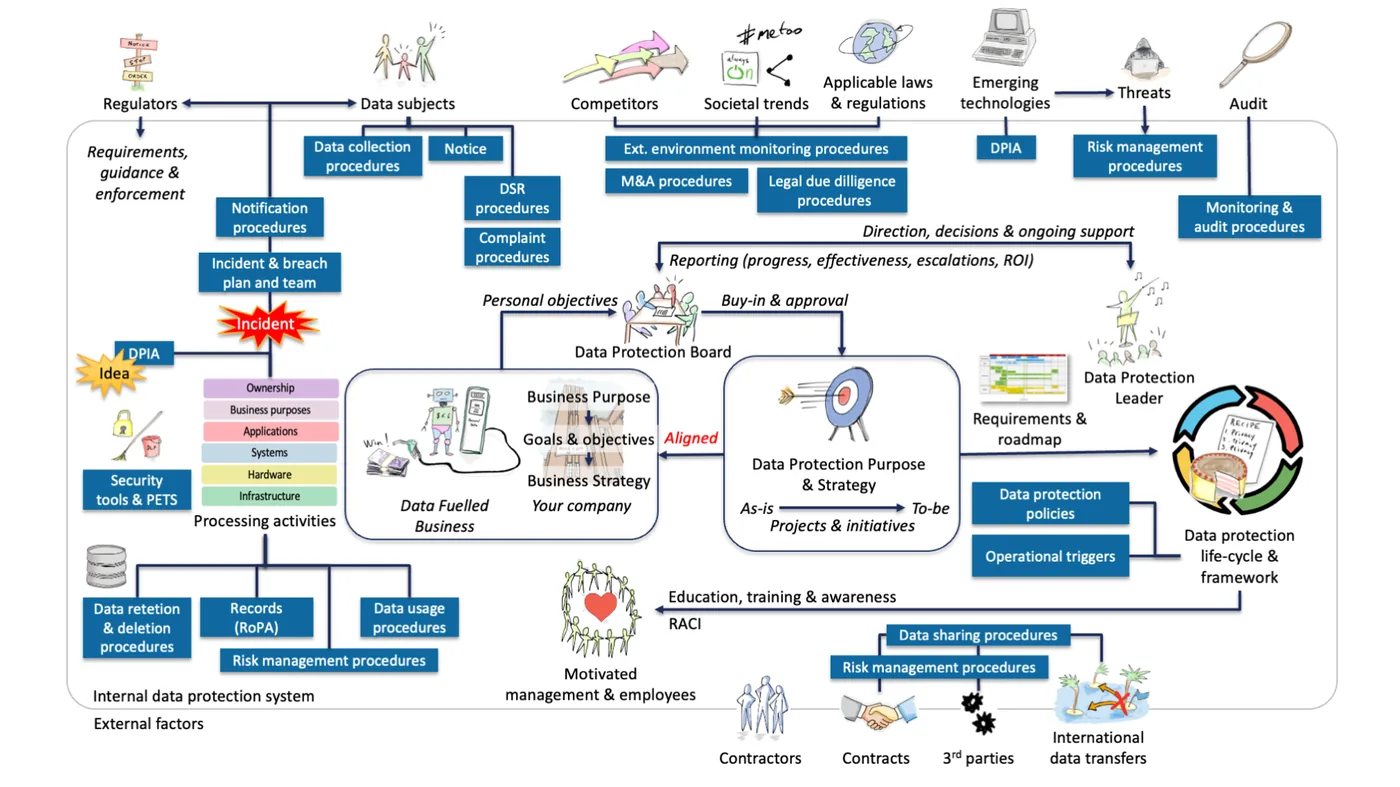
How we do it #
Discovery and context setting. We start by understanding your programme’s scope, objectives, and stakeholder landscape. We define assessment criteria based on industry standards and your organisation’s specific priorities — not a one-size-fits-all template.
Assessment. We evaluate your programme practices against established frameworks, analysing alignment with business goals, regulatory requirements, and how well the programme actually lands with employees and business functions.
Insights and reporting. We deliver a clear report outlining strengths, weaknesses, and gaps — with actionable recommendations for both immediate quick wins and longer-term improvements. This includes management summaries and, where needed, a leadership workshop to build alignment and buy-in.
Roadmap development. We prioritise actions based on criticality and business impact, and design a step-by-step plan with clear milestones and deliverables to elevate your programme’s maturity.
What we assess #
Leadership and oversight. Is the organisational structure right? Are reporting lines clear? Is there genuine accountability, or does data protection sit in a silo without executive sponsorship?
Policies and procedures. Do your policies actually reflect how the business operates? Are procedures practical and followed, or do they exist on paper while employees find workarounds?
Training and awareness. Is your education programme changing behaviour, or is it a tick-box e-learning exercise that employees click through and forget? We assess design, delivery, and impact.
Transparency and trust. Is communication about data protection clear, consistent, and accessible? Does it build trust with employees, customers, and partners — or does it read like legal small print?
Metrics and continuous improvement. Are you measuring the things that matter? Do your metrics demonstrate progress to leadership and drive ongoing improvement, or are they activity counts that nobody acts on?
Outcomes you can expect #
- A clear, evidence-based picture of your programme’s strengths, weaknesses, and areas for improvement.
- Actionable recommendations aligned with your company’s risk appetite and business objectives.
- Improved operational practices that bridge the gap between policy and day-to-day behaviour.
- A prioritised roadmap for building a mature, scalable, and effective programme — with the evidence to secure funding and stakeholder support.
Let’s get started #
If you suspect your programme has gaps but lack the evidence to prioritise them — or if you need an independent view to validate what your team already knows — book a call to discuss a bespoke assessment.
Frequently Asked Questions #
What is a data protection maturity assessment? #
A maturity assessment is a structured evaluation of your data protection programme across key dimensions — leadership, policies, training, transparency, metrics, and more. It gives you an objective, evidence-based picture of where your programme stands today, where the gaps are, and what to prioritise next. It’s not an audit — it’s a diagnostic tool for improvement.
How is this different from an internal audit or a regulatory inspection? #
Audits typically check compliance against specific legal requirements. A maturity assessment goes broader and deeper — it evaluates how well your programme works in practice, not just whether it exists on paper. It looks at employee engagement, stakeholder alignment, operational effectiveness, and business integration alongside regulatory compliance.
How long does a maturity assessment take? #
A typical assessment runs 4–6 weeks depending on the size and complexity of your organisation. This includes discovery, stakeholder interviews, evaluation, reporting, and roadmap development. We can also run focused assessments on specific areas — for example, training effectiveness or governance structures — in a shorter timeframe.
Can this approach be used for programmes beyond data protection? #
Yes. The same methodology works for AI governance, information security, ESG programmes, and any discipline where you need to assess maturity, identify gaps, and build a prioritised improvement roadmap.